Kiryat Arba-Hebron Train Station (Sha’ar HaAvot, “Gate of the Patriarchs Station”)
Sha’ar HaAvot Station is the southern gateway to the Holy Cities Rail Line — a civic railway station that blends timeless Jerusalem stone architecture with a vibrant public plaza, connecting heritage, community, and opportunity along a new national corridor.
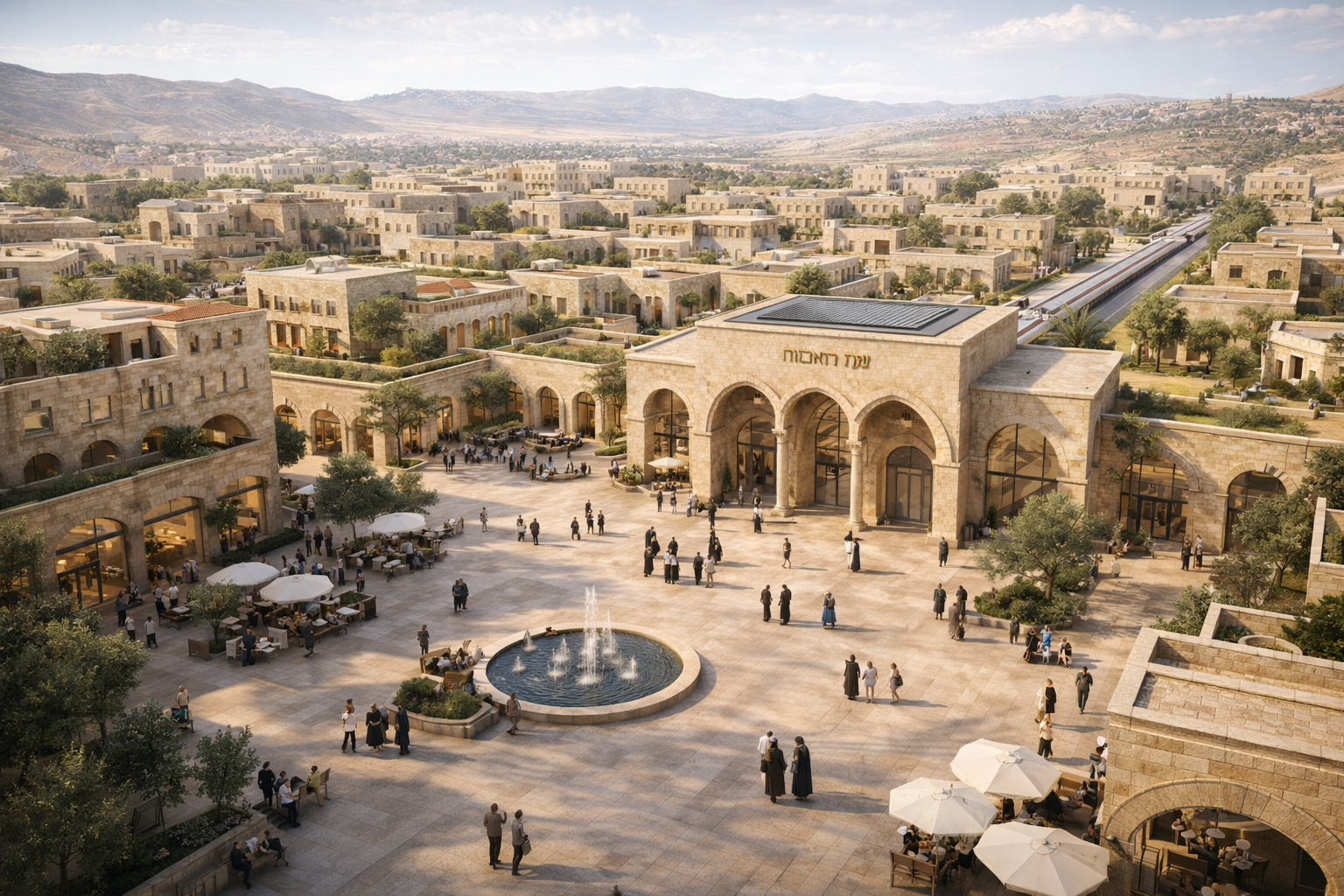
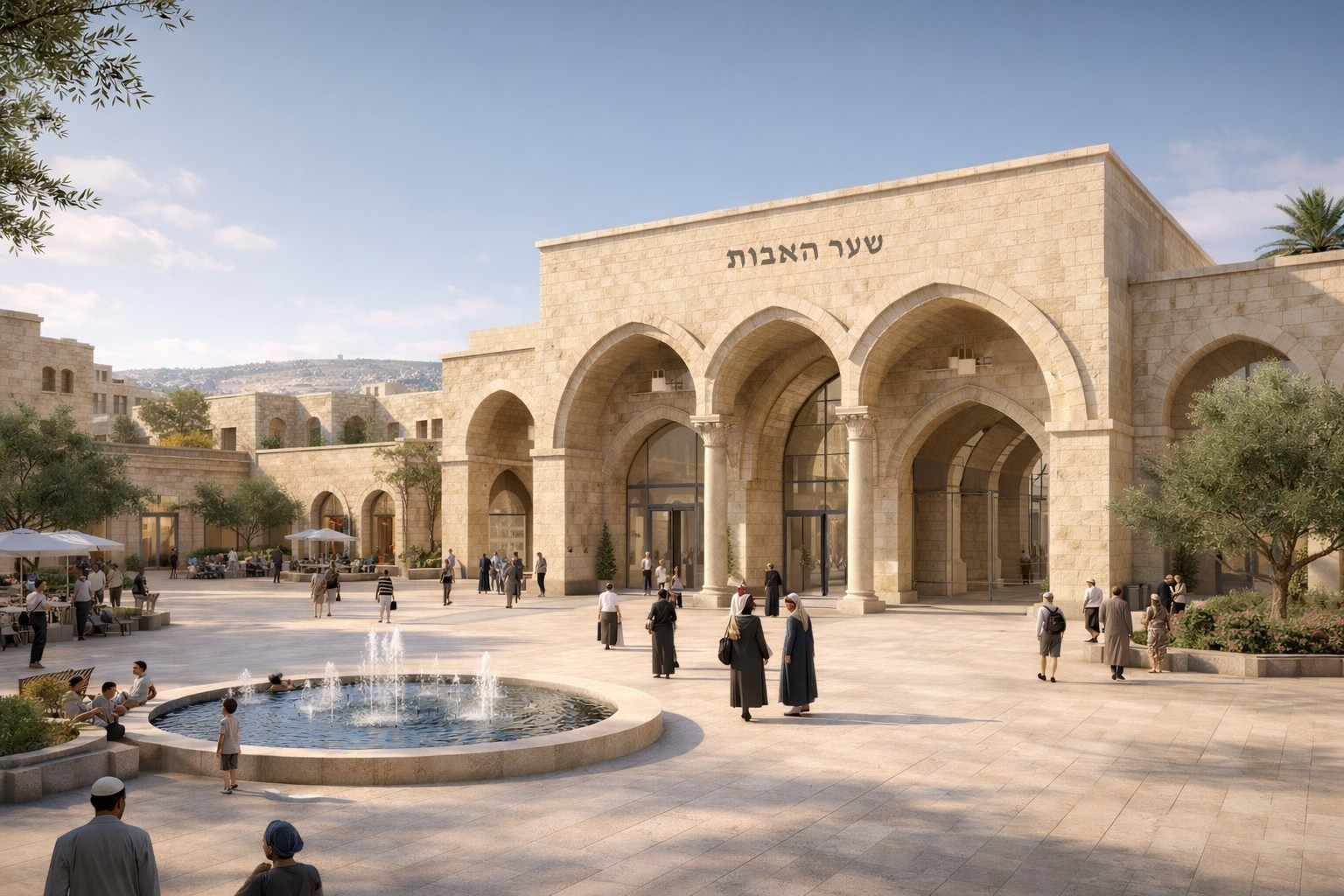
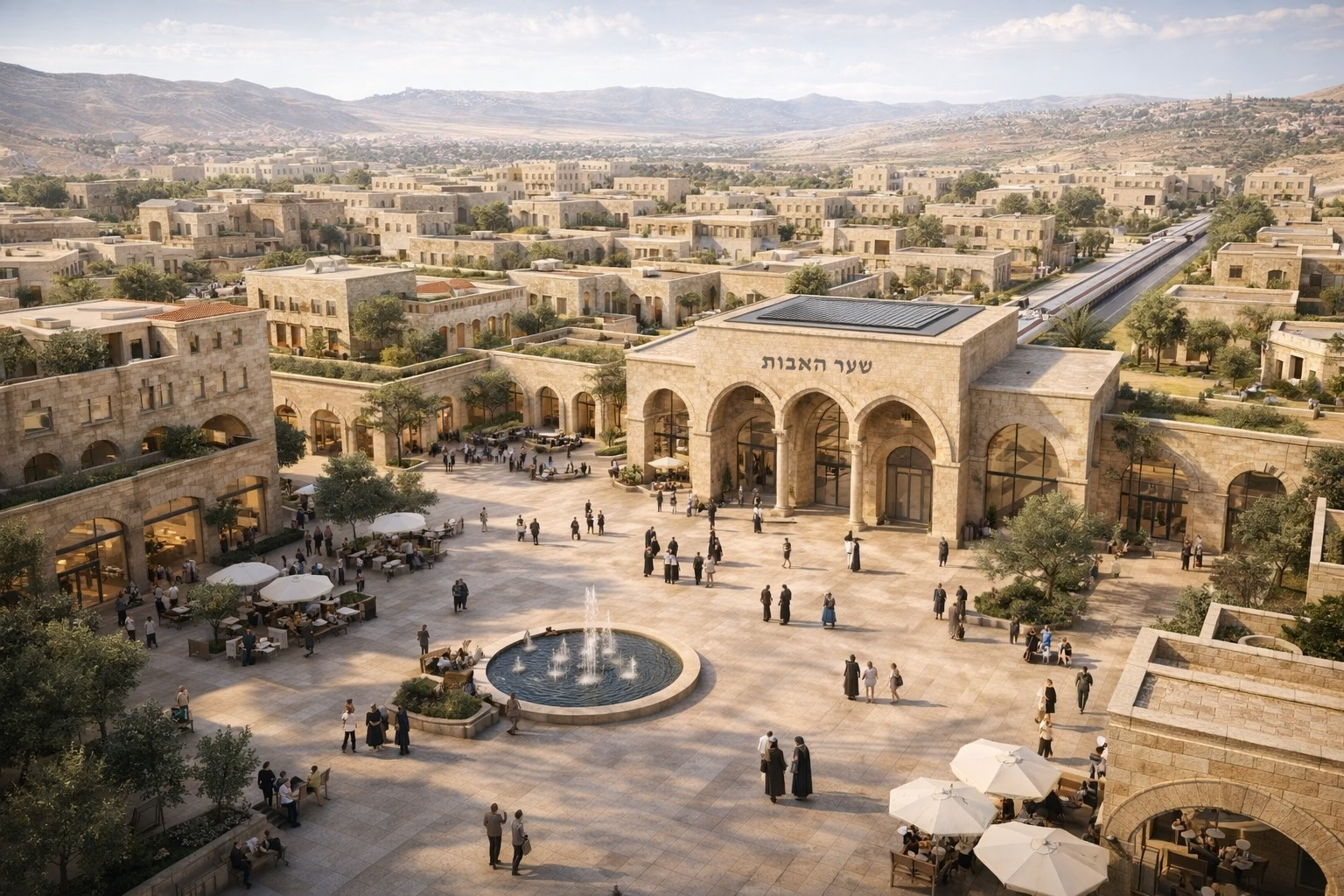
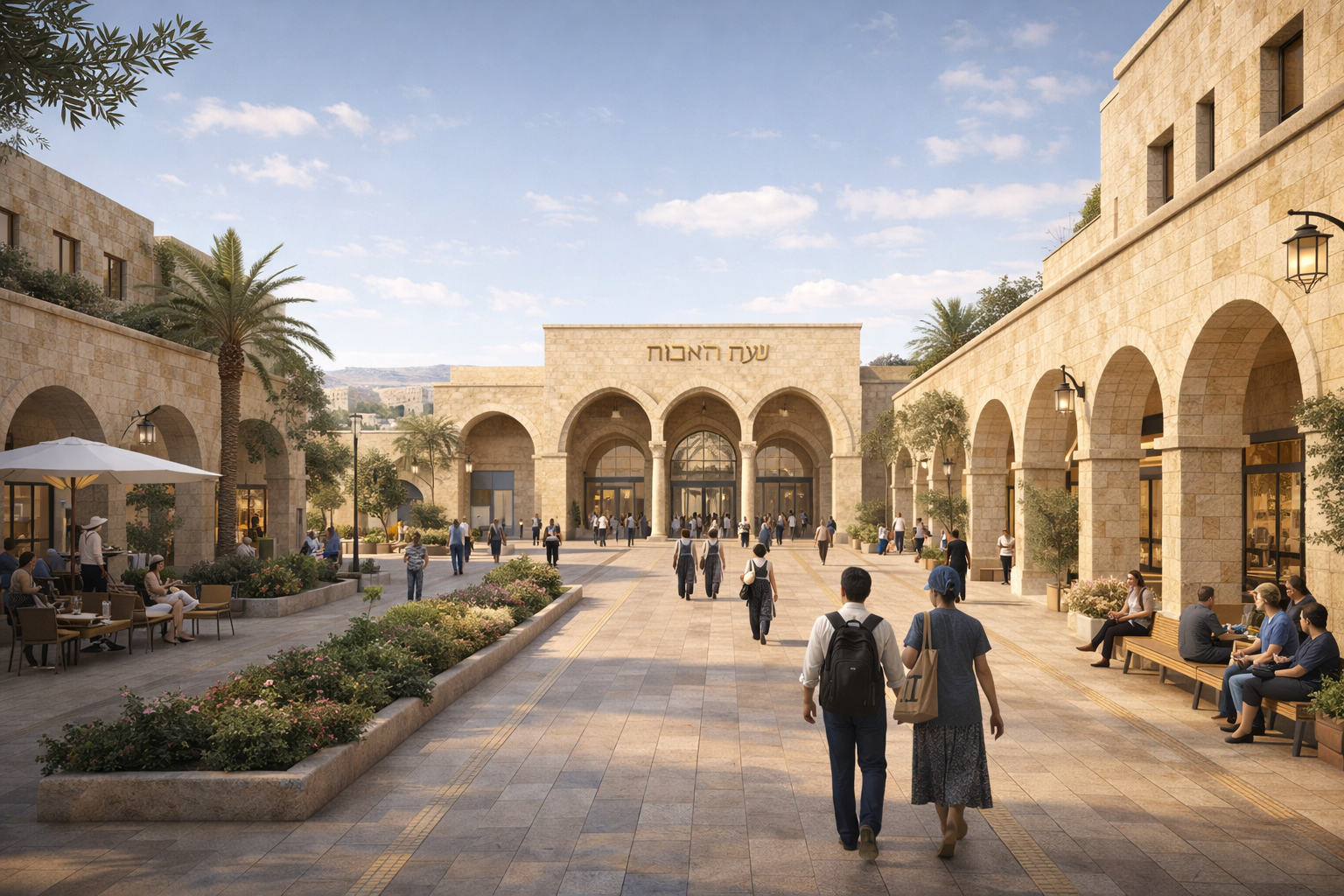
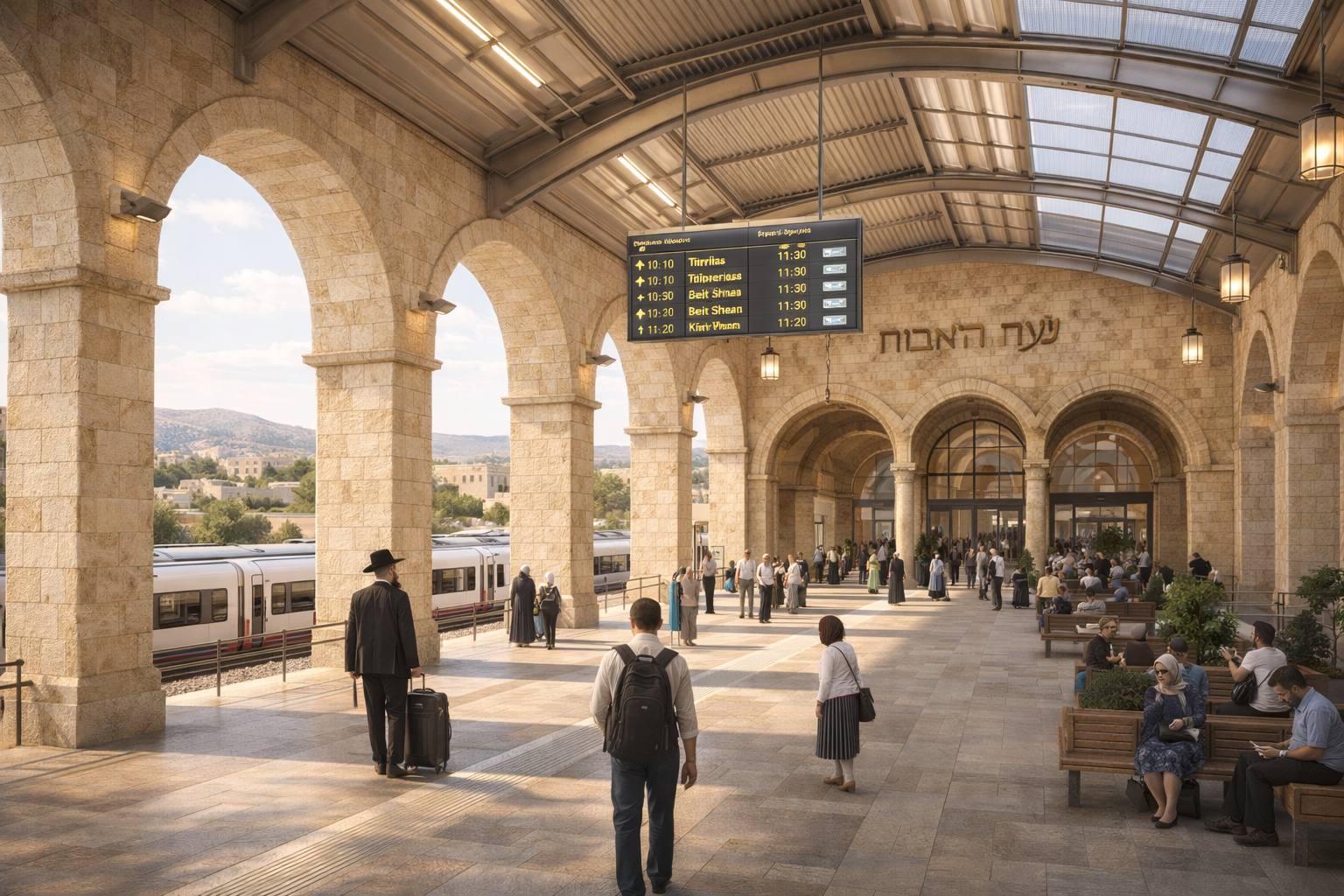
Sha’ar HaAvot Station (Gate of the Patriarchs) is envisioned as the southern gateway to the Holy Line rail corridor and a new civic heart for Kiryat Arba. More than a transportation hub, the station is designed as a living public space that blends timeless architectural language with modern mobility, expressing continuity between Israel’s ancient heritage and its future of connectivity and growth.
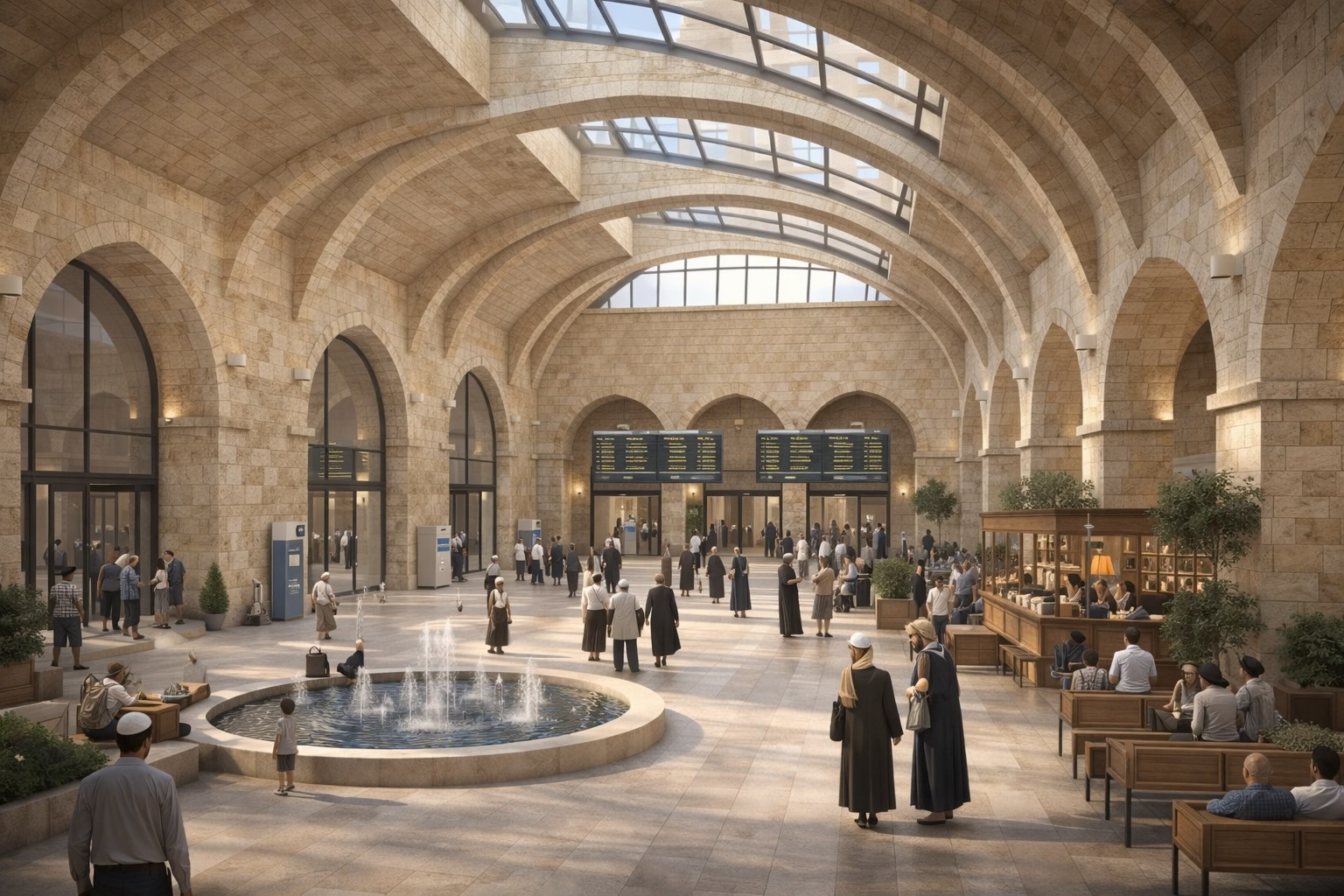
The station’s architecture draws inspiration from the historic cities of Judea and Jerusalem, using locally sourced limestone, grand stone arches, and colonnaded walkways to create a sense of permanence, dignity, and welcome. Its form recalls the traditional caravanserai and market halls of the region—places of arrival, exchange, and gathering—reinterpreted through contemporary construction and engineering. Natural light enters through vaulted skylights and shaded arcades, ensuring a bright, comfortable interior while responding to the local climate with passive cooling and ventilation strategies.
At the heart of the design is a central civic plaza, framed by cafés, small shops, and shaded seating areas. This plaza functions as Kiryat Arba’s new town square: a place for daily life, community events, and visitors arriving from Jerusalem and the Galilee. The station is fully integrated into surrounding neighborhoods through pedestrian boulevards and landscaped promenades, prioritizing walkability over car dependency and encouraging mixed-use urban development around the rail corridor.
Inside the main passenger hall, soaring stone vaults create a calm and dignified space for travelers. The interior combines traditional materials—stone, wood, and bronze—with modern rail technology, clear signage, and efficient circulation. Program elements include waiting areas, a café and bookshop, a prayer room, and community-oriented spaces that allow the station to remain active throughout the day, not only during peak commuting hours.
Sha’ar HaAvot Station represents a new model of infrastructure in Israel: not merely a transit facility, but a cultural and urban landmark. It embodies the vision of reconnecting the holy cities through a shared architectural language, strengthening employment access for the periphery, and shaping new neighborhoods that are human-scale, walkable, and rooted in place. Through its design, the station signals a broader national ambition—to build infrastructure that unites history, community, and future opportunity in a single, enduring form.
All city designs are the exclusive property of Michiya and its affiliates. They may not be used for commercial use without the express approval of the organization.